Project
Mercari: Integrating social and community features into the marketplace
UX Content Design
 (1).png)
Project
UX Content Design
Overview
Mercari is a marketplace where people can buy and sell freely. An important part to transacting is being able to interact with others, yet users are limited in the ways they can do so. In response, this project seeks to develop ways people can engage with one another and find community within the marketplace.
A key part of transacting on Mercari is being able to interact with others, yet users were limited in the ways they could do that. In fact, users could only message other sellers from individual item detail page. This affected how users could connect with one another, impacting the ability to build trust between users and in the platform itself.
In response, this project was aimed at developing more ways for people to engage with one another and find community within the marketplace. By speaking directly to users to learn about their shopping behavior, we identified new conversation types to encourage on the platform and foundational features that could further this. This included direct messaging, comments, community groups, and following behavior.
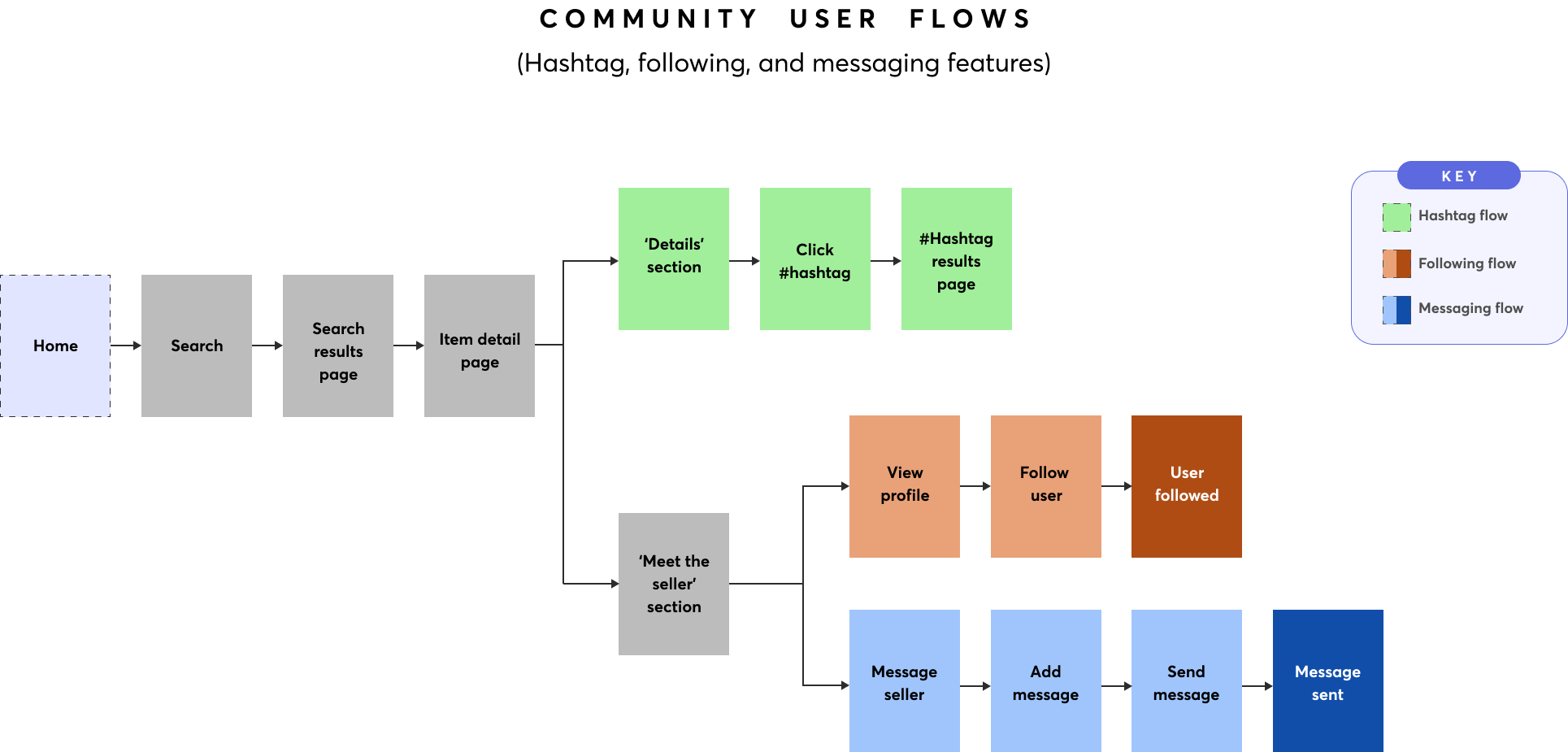
To start, I mapped out the existing user flows for community and social features. This helped the team understand the existing state of these features and how we could build upon them for future iteration.
While there was existing functionality related to community, all related features had gaps that affected their adoption.
.png)
Before exploring solutions, I partnered with research and data teams to understand how users use existing features. Our target audience was the Gen Z audience, specifically collectors and hobbyists who frequent Mercari.
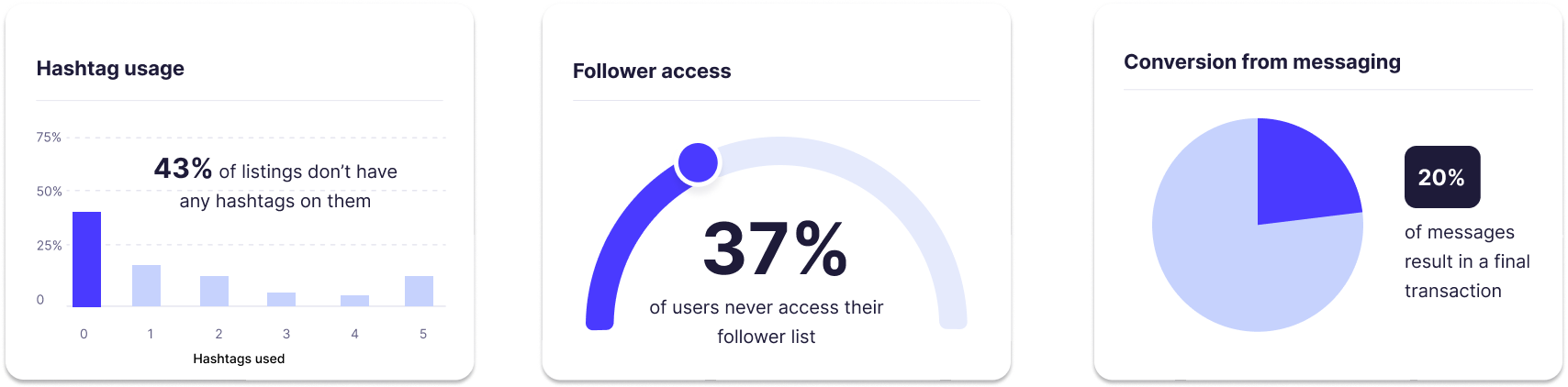
Through 1:1 interviews with users, we shared some early concepts which revealed insights:
One part of the content development process was determining the tone when it came to community related content. Often, content on Mercari is straight-forward, informative, and concise. Considering one of the main demographics we wanted to target was Gen-Z, I had to lead into content that felt inspiring, thoughtful, and engaging.
With the many new features and existing surfaces affected, it was important to have a clear documentation of how to refer to things. I laid out a map of how the language for core social features connected with one another and possible naming options. This helped understand the relationship between features and craft the ways to externally refer to new product.
.png)
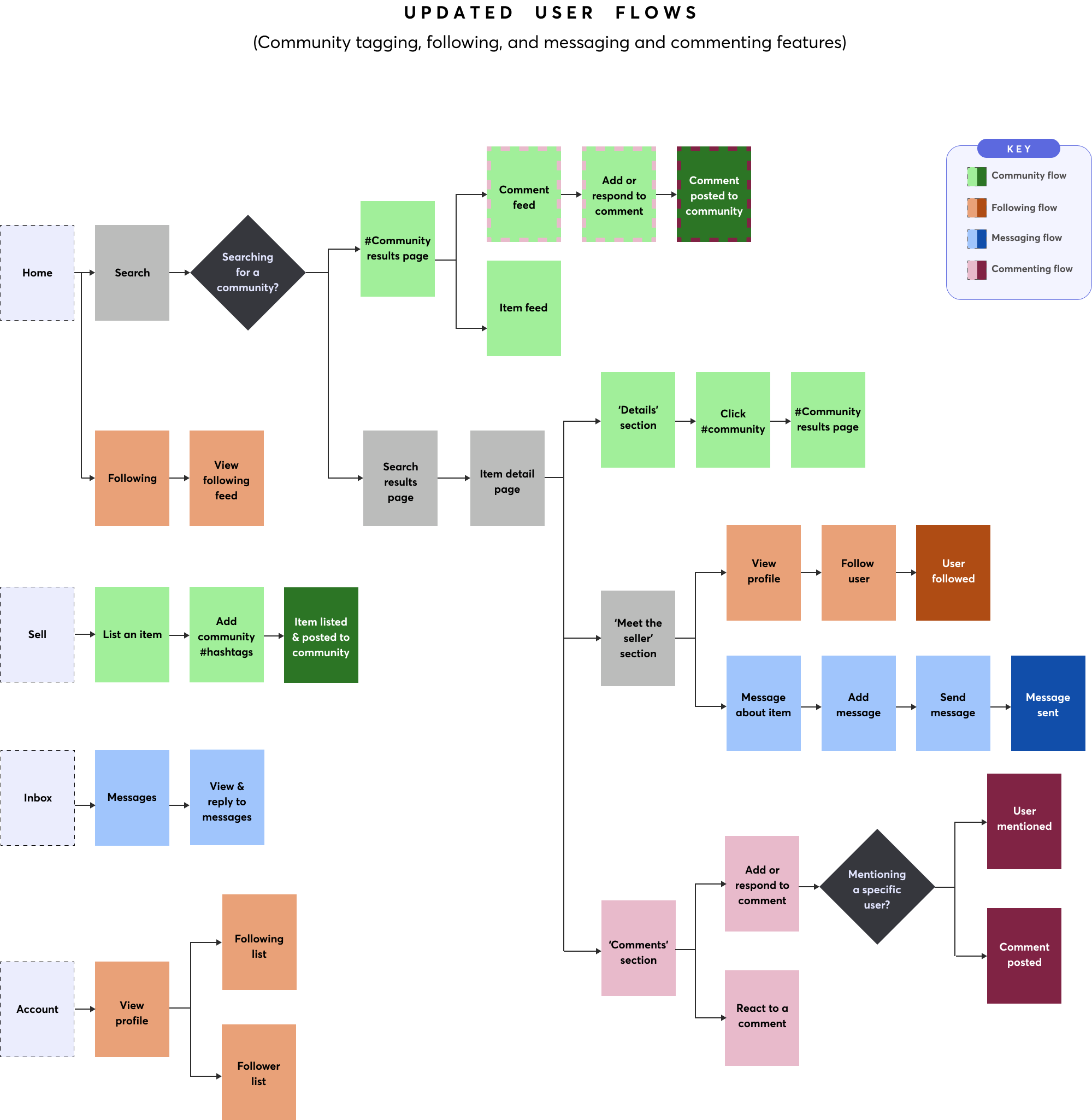
After we worked as a group to prioritize the different feature sets, I updated the map with the proposed flows for community-related features and how they would cross one another.
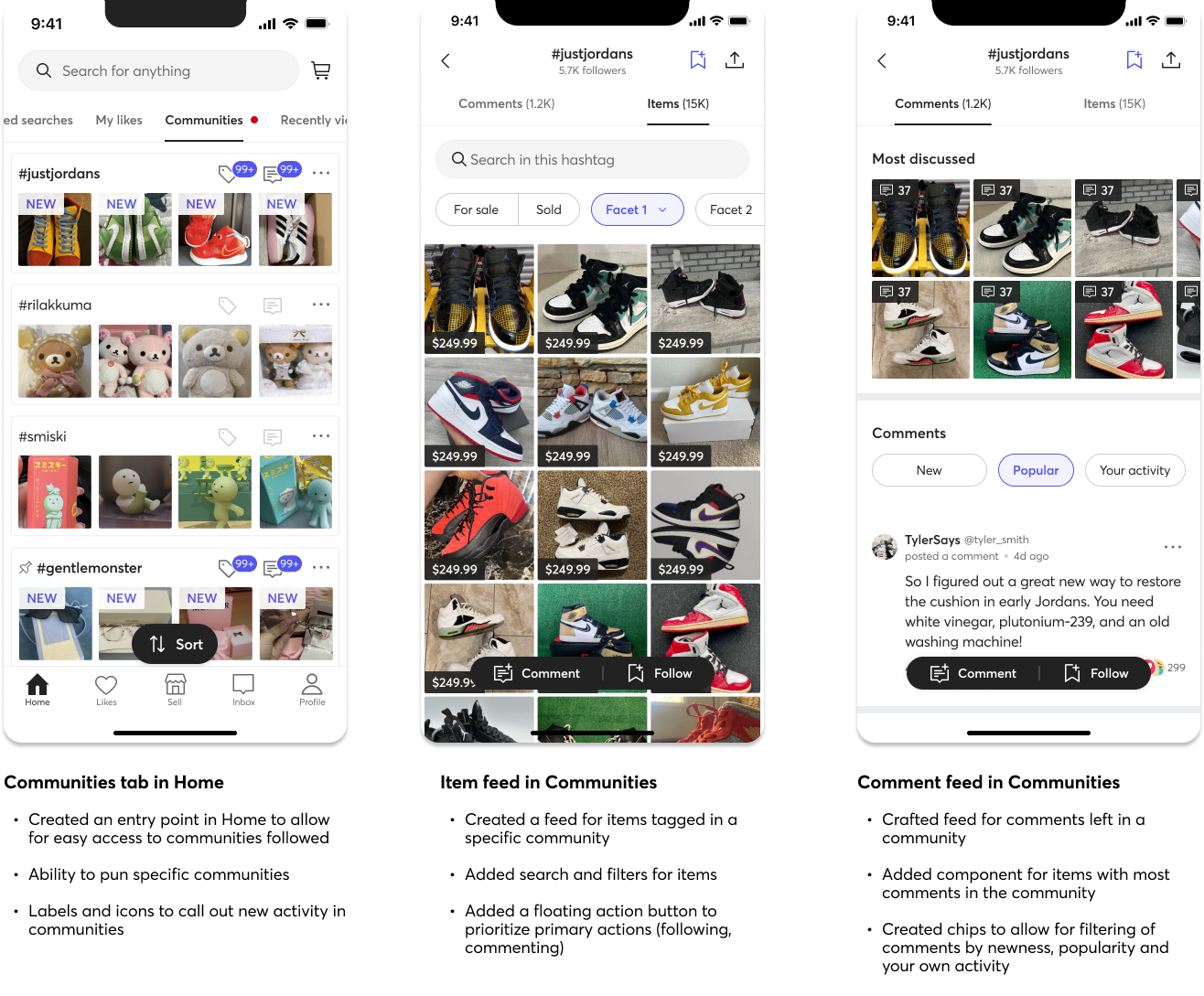
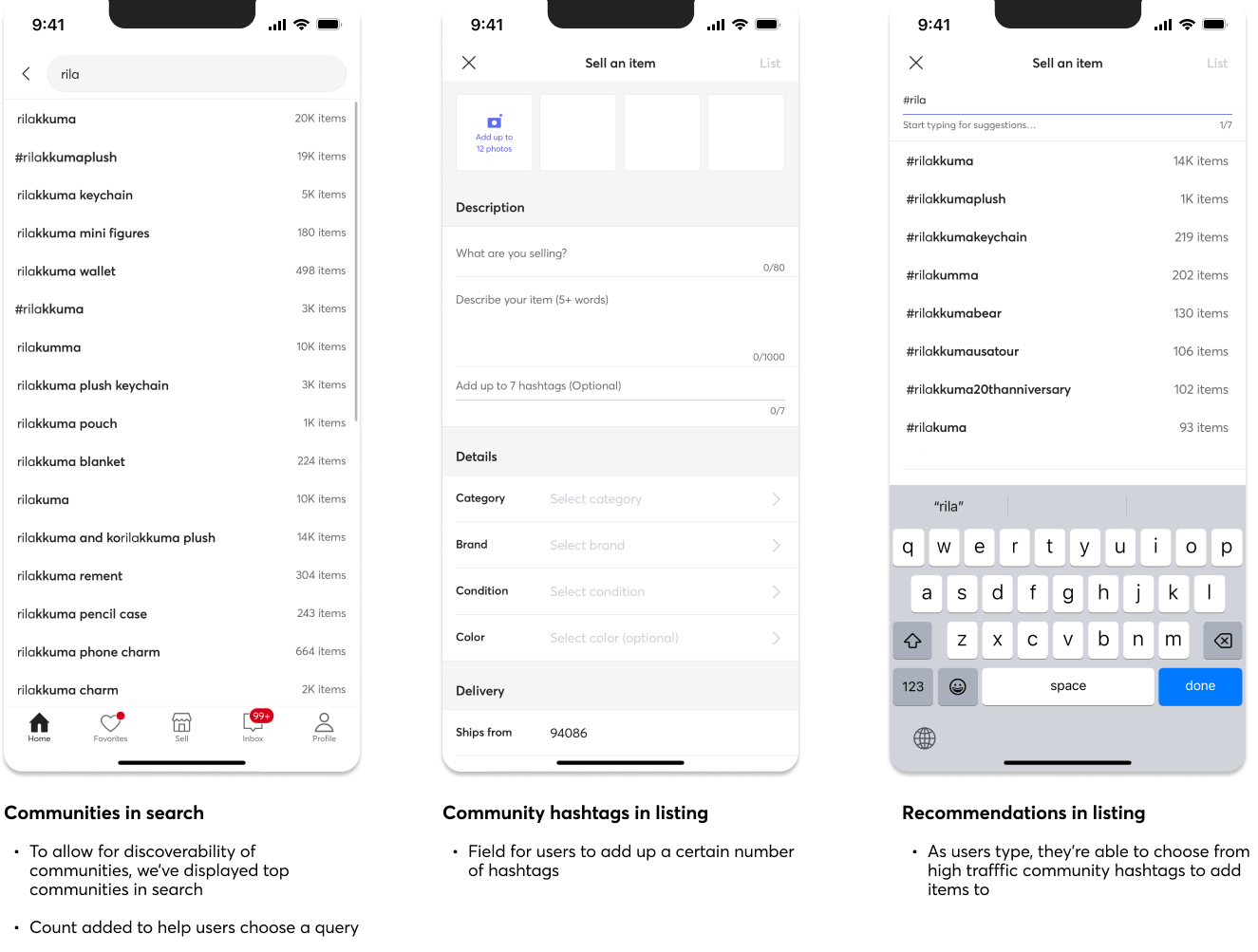
Throughout this project, we built upon the existing foundation from the hashtag flow. One of the massive shifts was around shifting the mental model of hashtags from another search results page into a vibrant space for users to connect with one another and revisit.
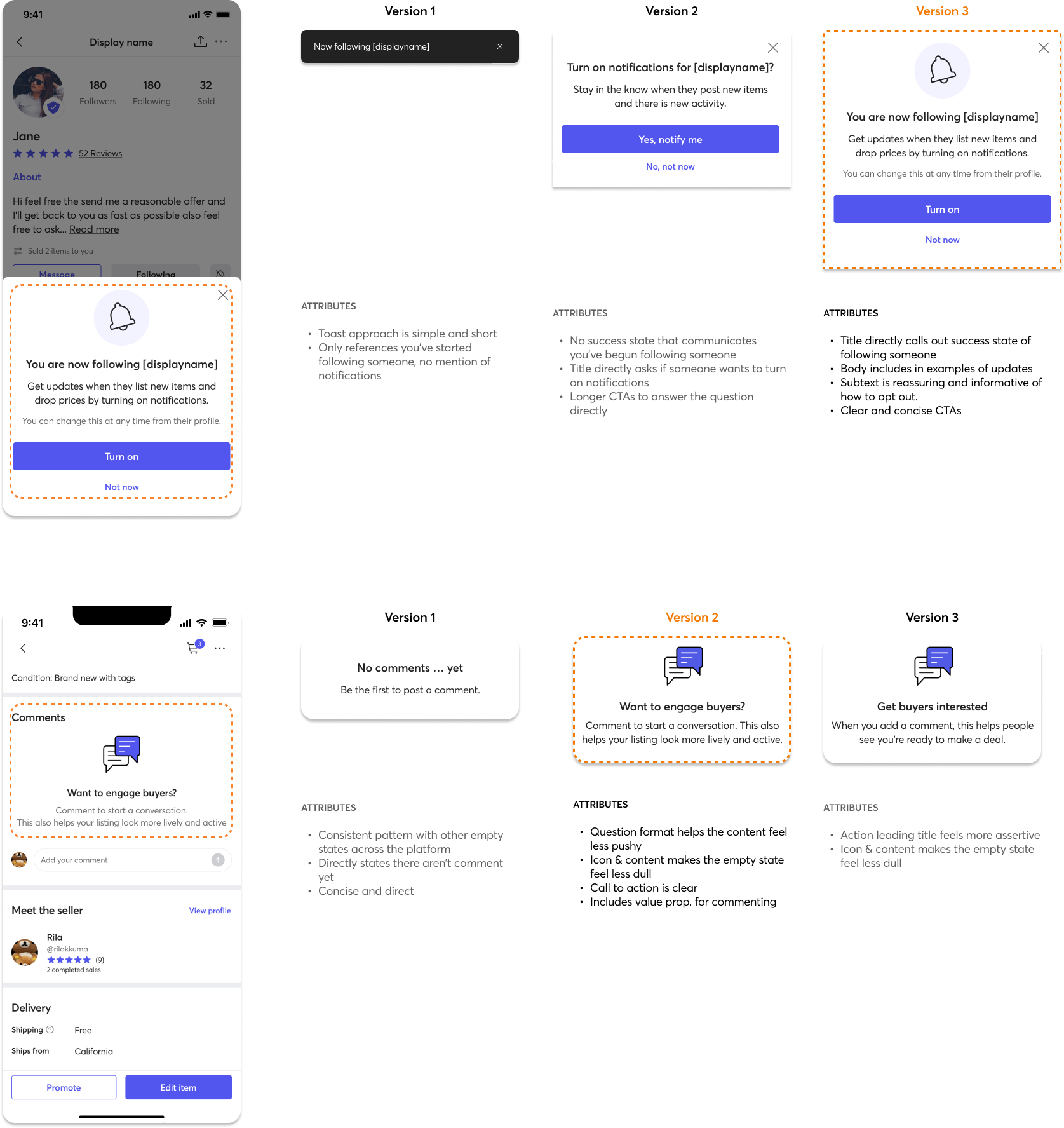
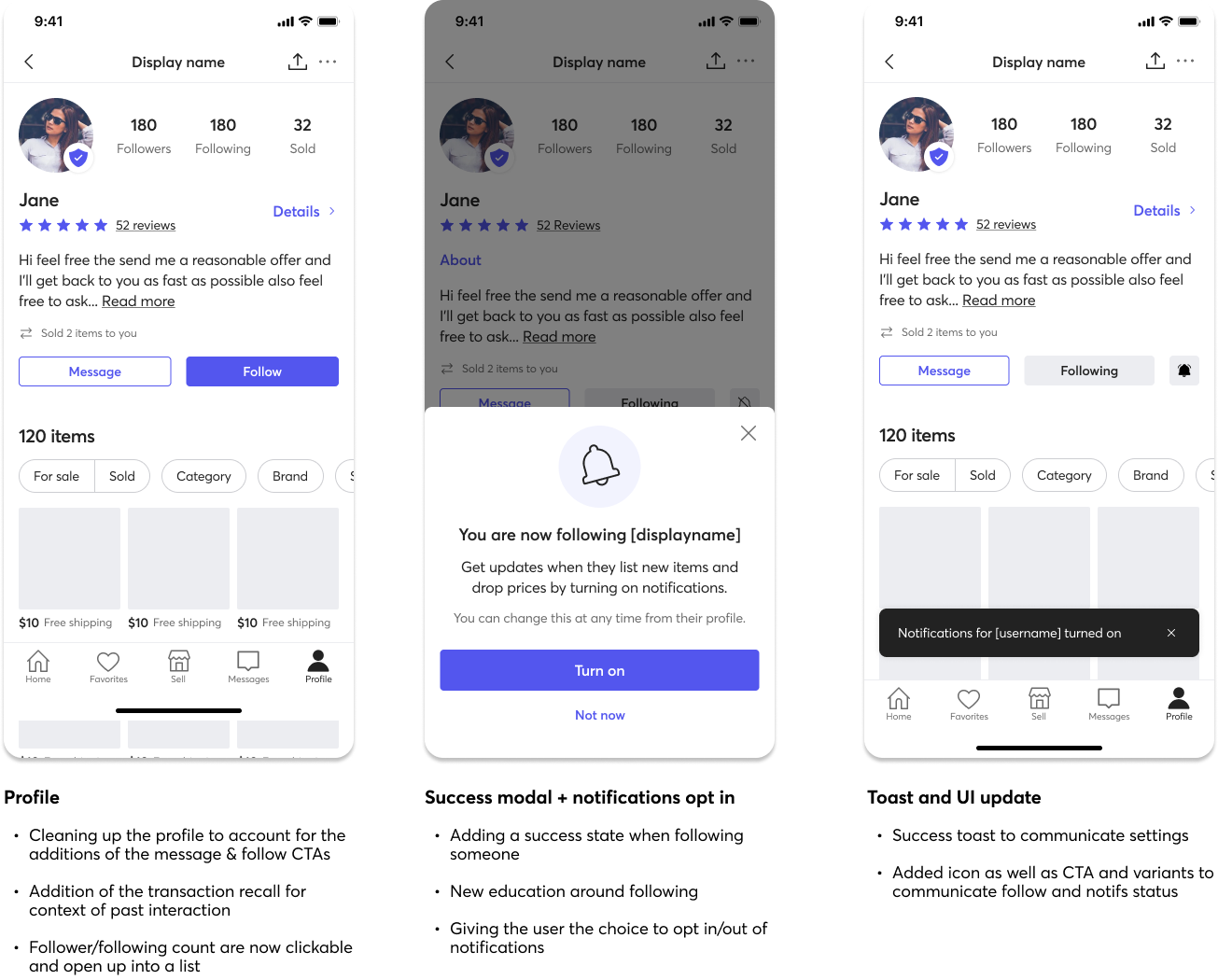
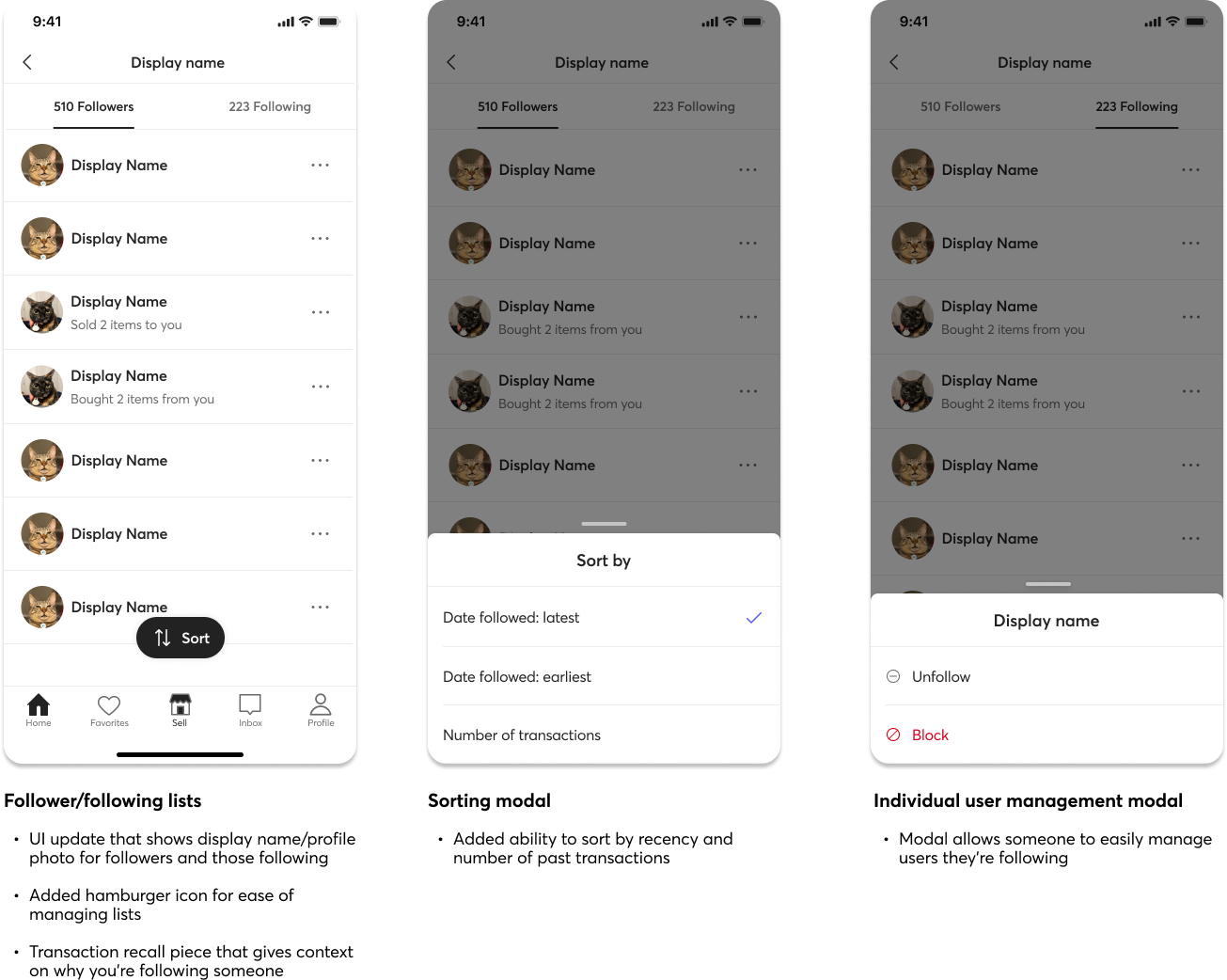
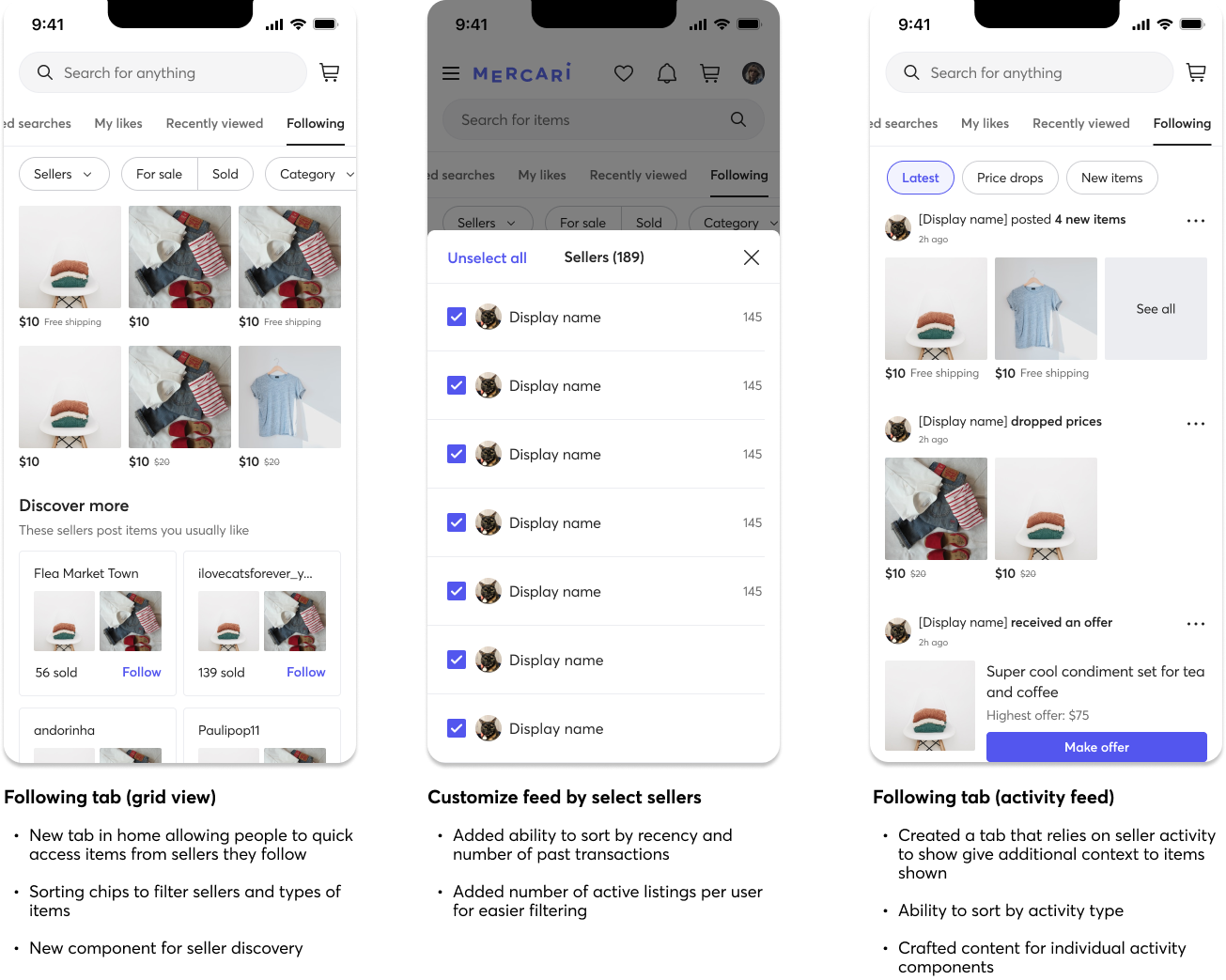
A major goal of the "Following" feature set was to increase visibility of people someone follows. We created clearer entry points that also gave users more control over following others and finding people more easily.
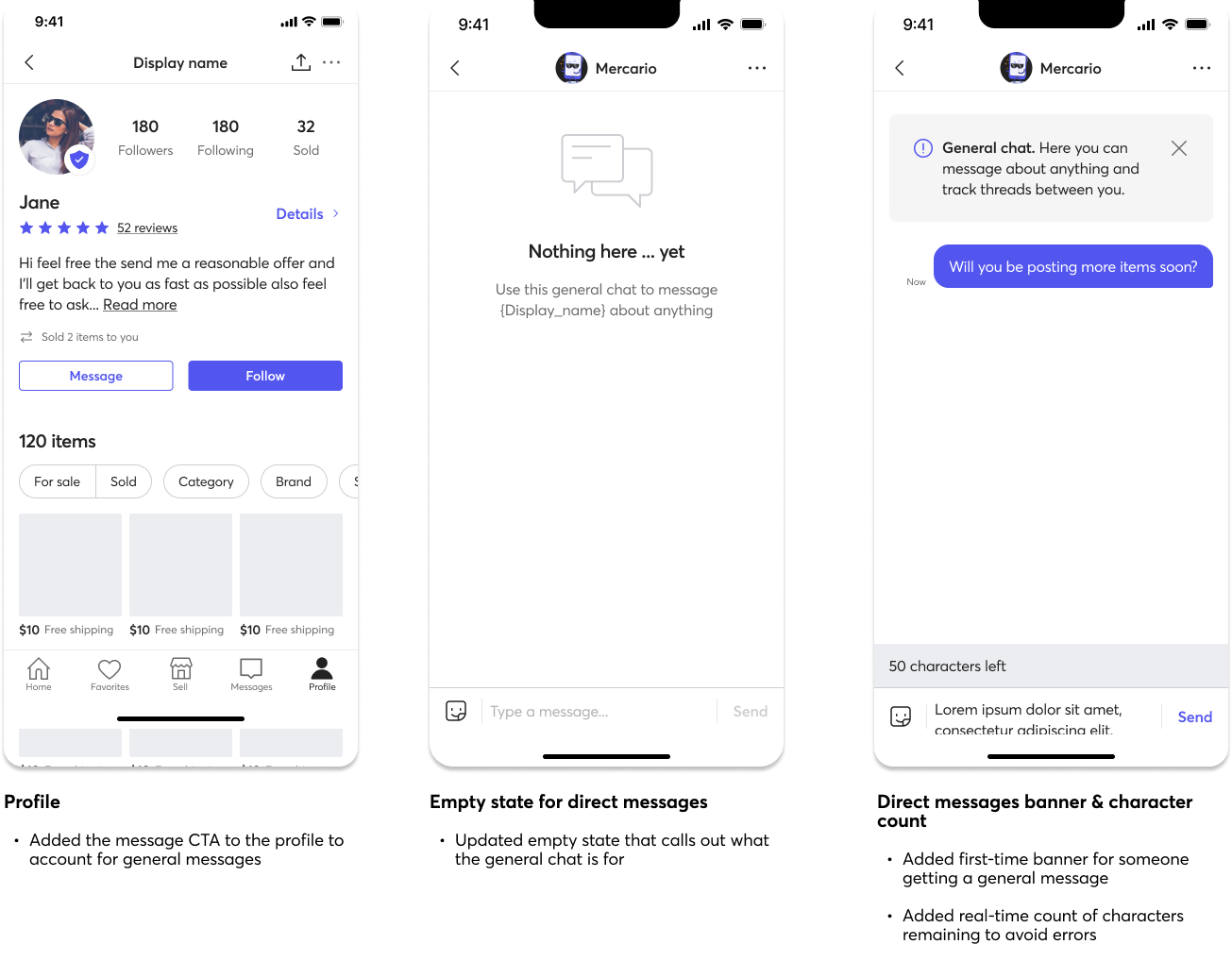
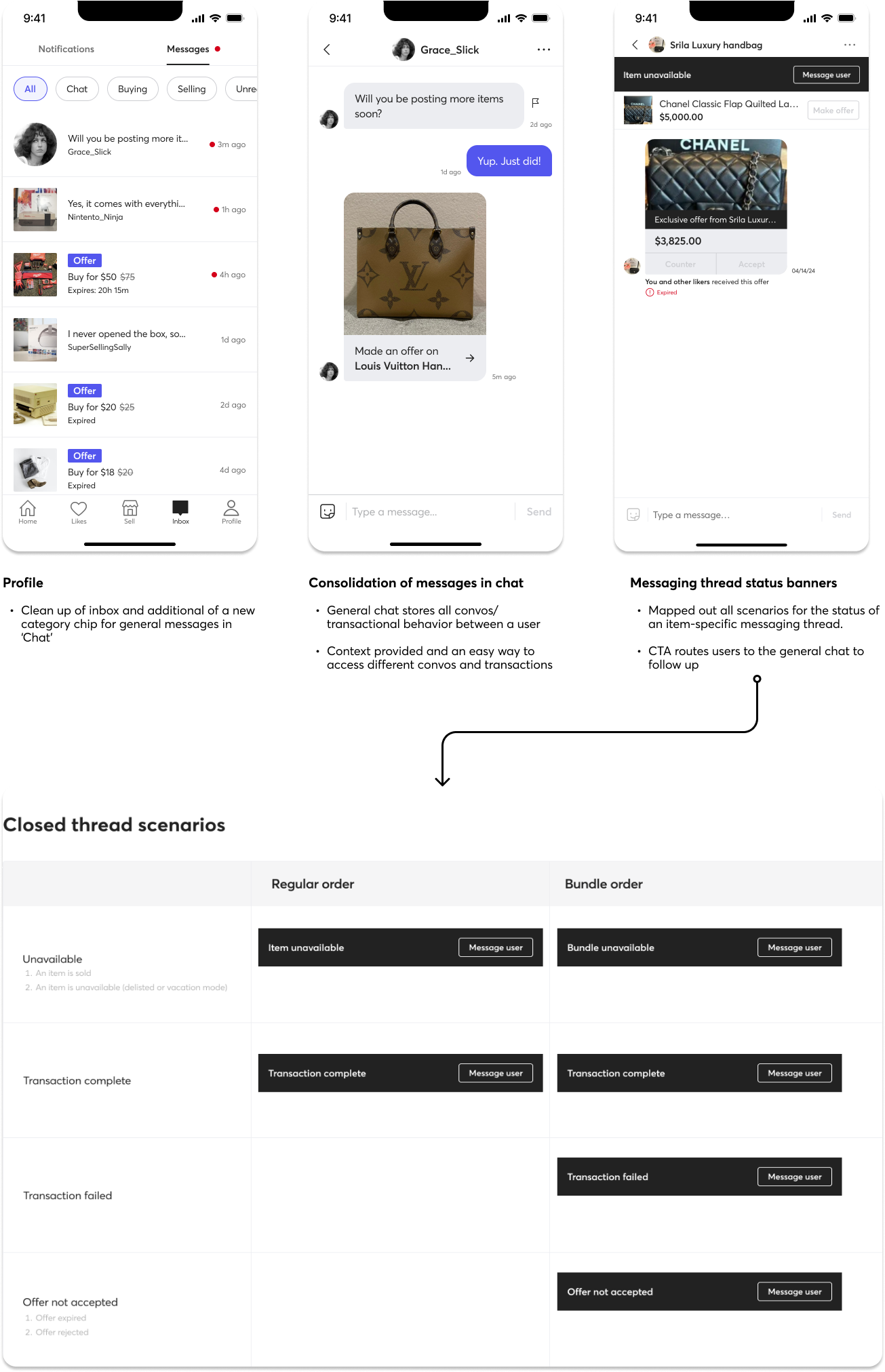
To increase interaction between users, we wanted to remove barriers that would allow organic, non-single item conversation to take place. This included a new entry point and more reassurance about messaging with others. I also crafted more upfront communication of the status of messages to prompt users to take action when applicable.
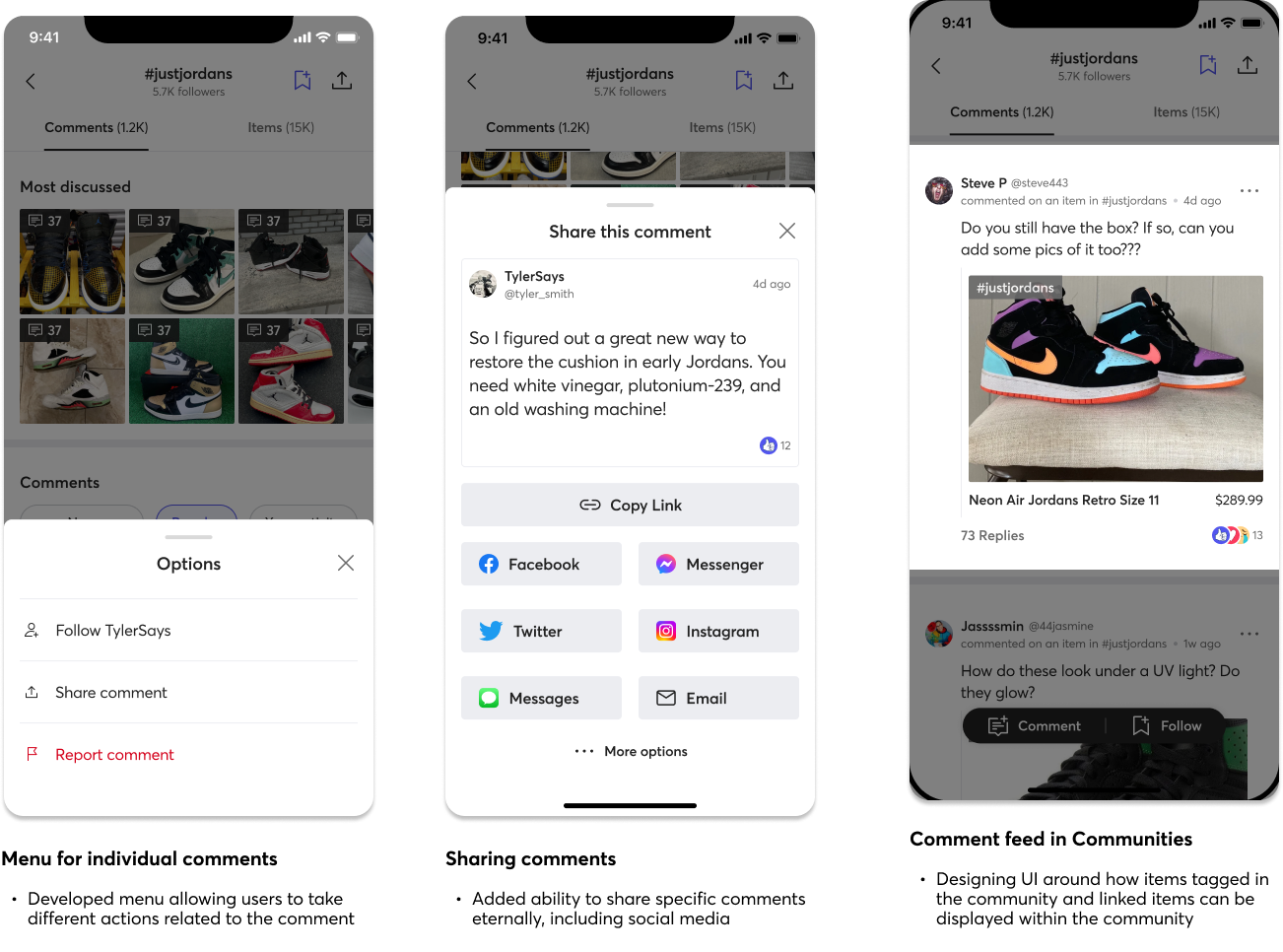
Outside of messaging, we wanted to promote more transparency and public discourse. Through comments, I've crafted messaging that reinforces comments as a way for people to provide feedback, promote their items, and ask questions.
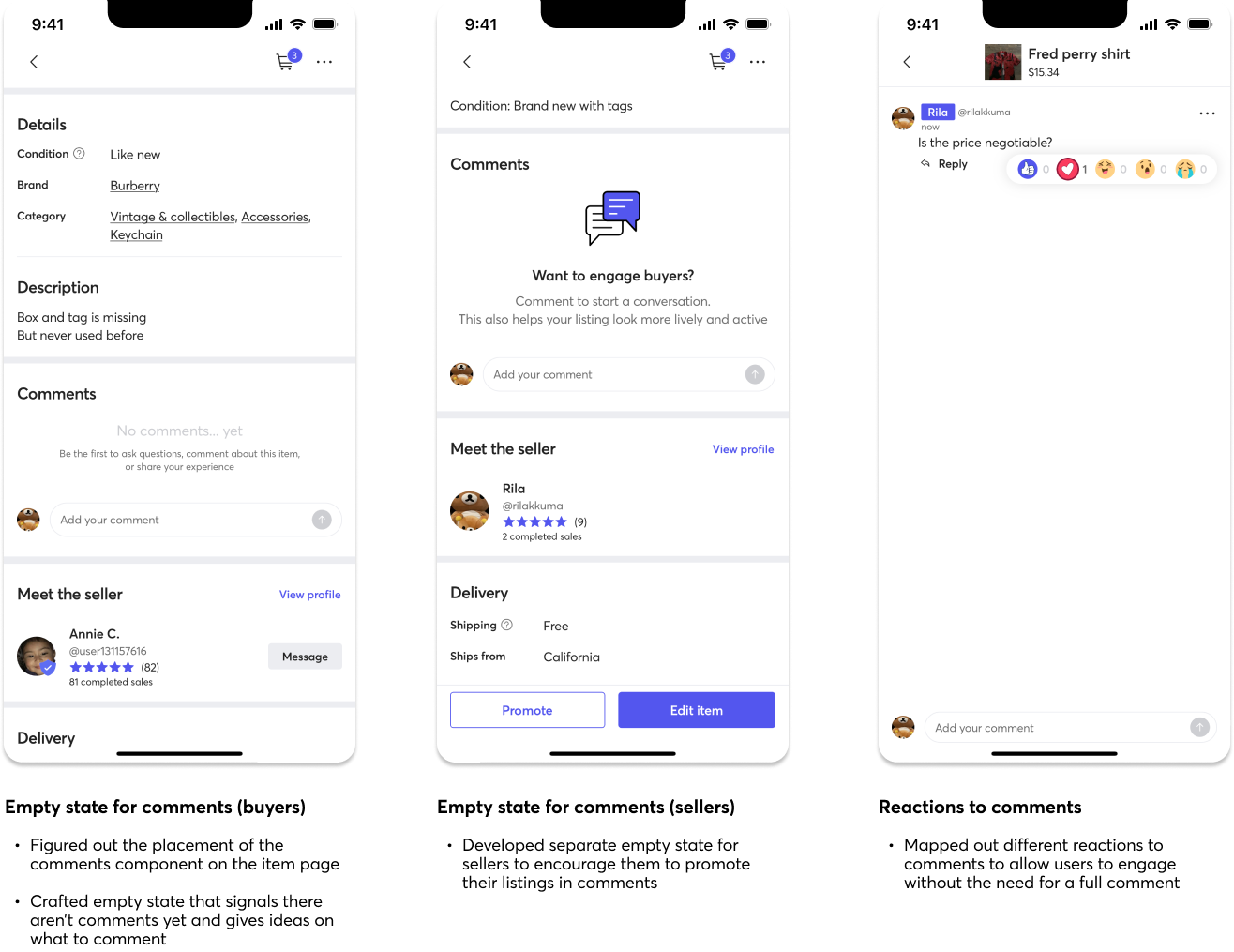
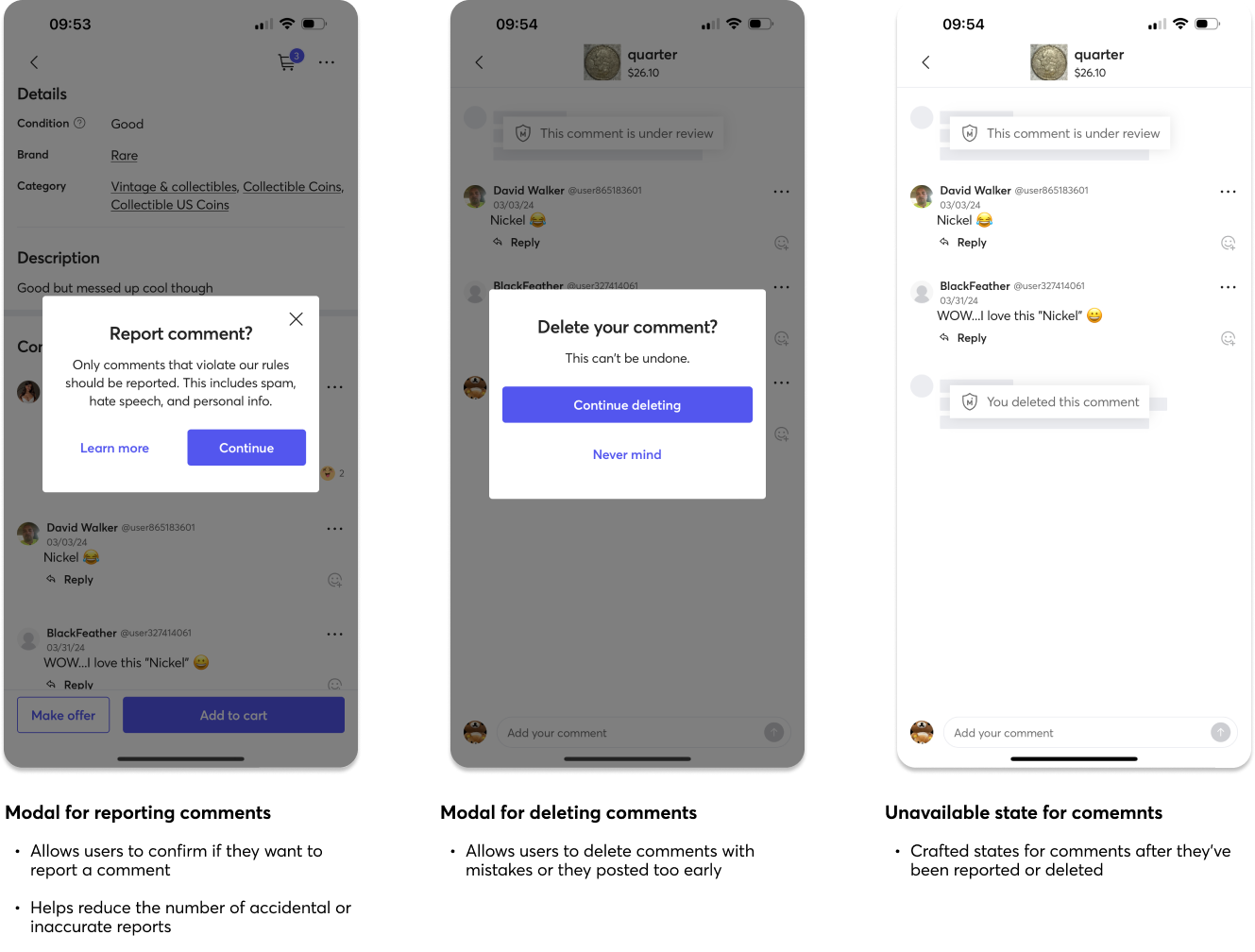
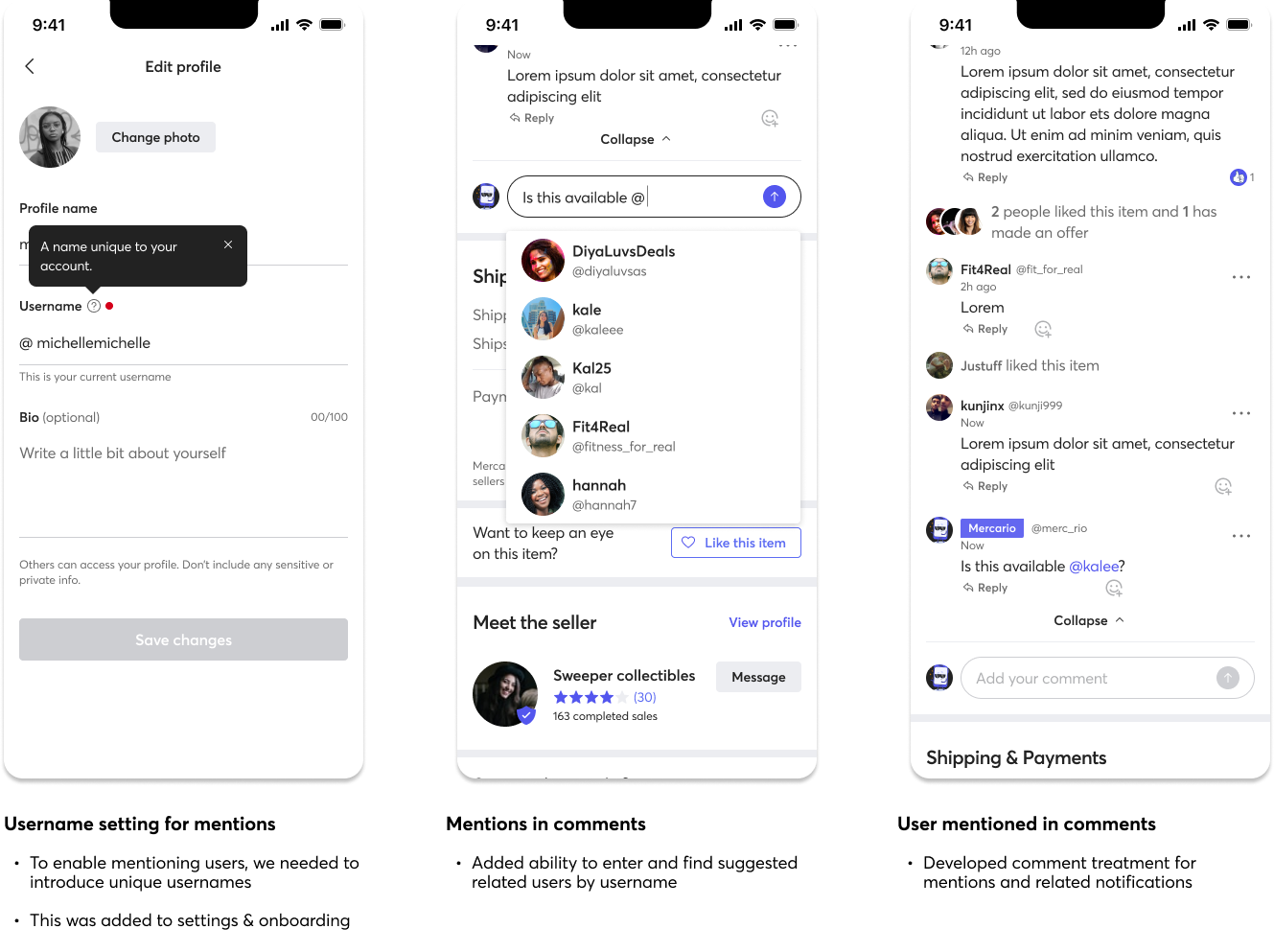
Through rounds of iteration and continued refinement from dogfooding, community features were released on Mercari.
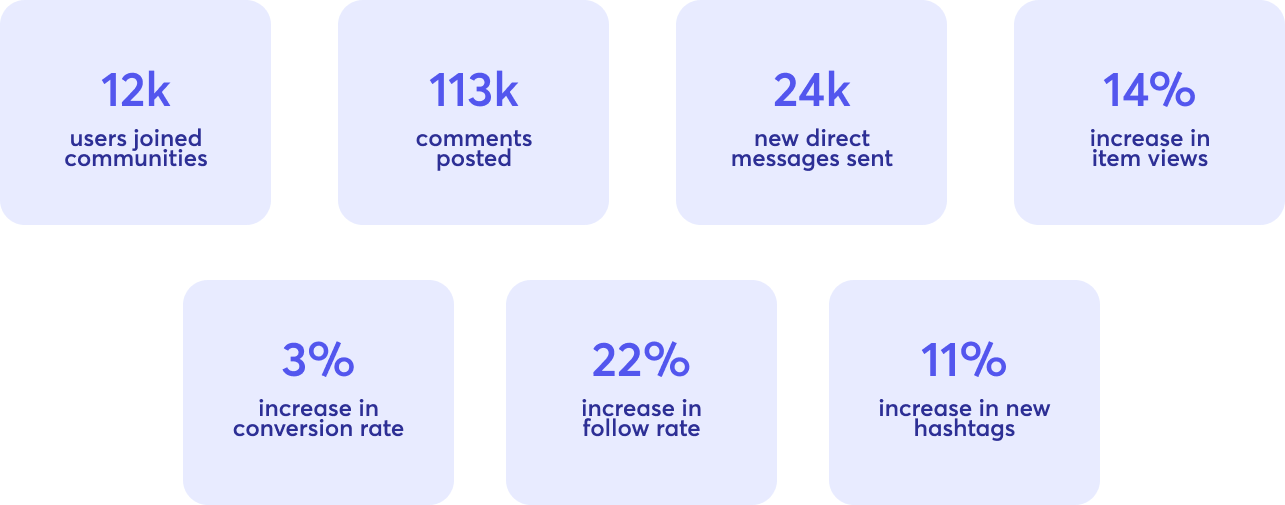
Since the launch of community features, we saw an increase in engagement across Mercari across all feature sets. We observed an effect on increase in item views as well as overall conversion rate which signaled how these social-features enabled more transactions to take place.
This project focused on building a stronger sense of community within Mercari's marketplace. I listened to users to understand their needs and tackle issues like hashtag confusion and limited messaging options. By introducing features like direct messaging, comments, and community groups, we made it easier for users to connect. This included turning abstract concepts like "communities" into a long-term vision with practical use cases in mind. As the lead Content Designer, I mapped out these features to highlight individual actions users could take while also identifying opportunities for future integration.
Looking ahead, the team has discussed strategies to drive organic engagement in community groups, such as implementing notifications and new content types to attract and retain users.