Project
Mercari: Improving adoption and completion of offers
UX Content Design
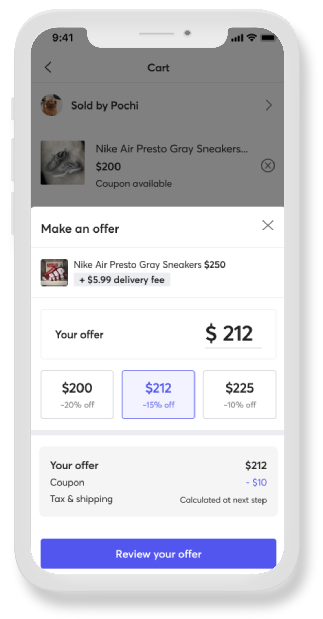
Project
UX Content Design
Overview
Mercari is a marketplace where people can buy and sell freely. One of the most critical features to Mercari is offers where people can negotiate to get something for less. Offers from buyers account for 40% of gross merchandise value (GMV) for the platform.
On Mercari, the offers feature is crucial for buyers as it allows them to negotiate better prices for items. It contributes to over 50% of app GMV and 30% of web GMV. However, unlike other platforms, Mercari's offer experience has unique attributes. For example, an offer requires a commitment to purchase if accepted, which can cause hesitation among buyers. Additionally, the lack of educational resources and a clear entry point for offer status often leaves potential buyers uncertain about what to expect when making an offer for the first time.
This project aims to inspire confidence in buyers making offers and to increase the completion rate of offers on the platform. We received direct feedback from customers and analyzed the data, which guided our evaluation of the existing experience. Our team developed and tested several concepts, leading to a comprehensive overhaul of the offers experience.
To better understand the offers experience, I led an audit of the end-to-end flow across web, mobile web, and app interfaces. Each platform had unique quirks that resulted in inconsistent experiences and unique challenges.
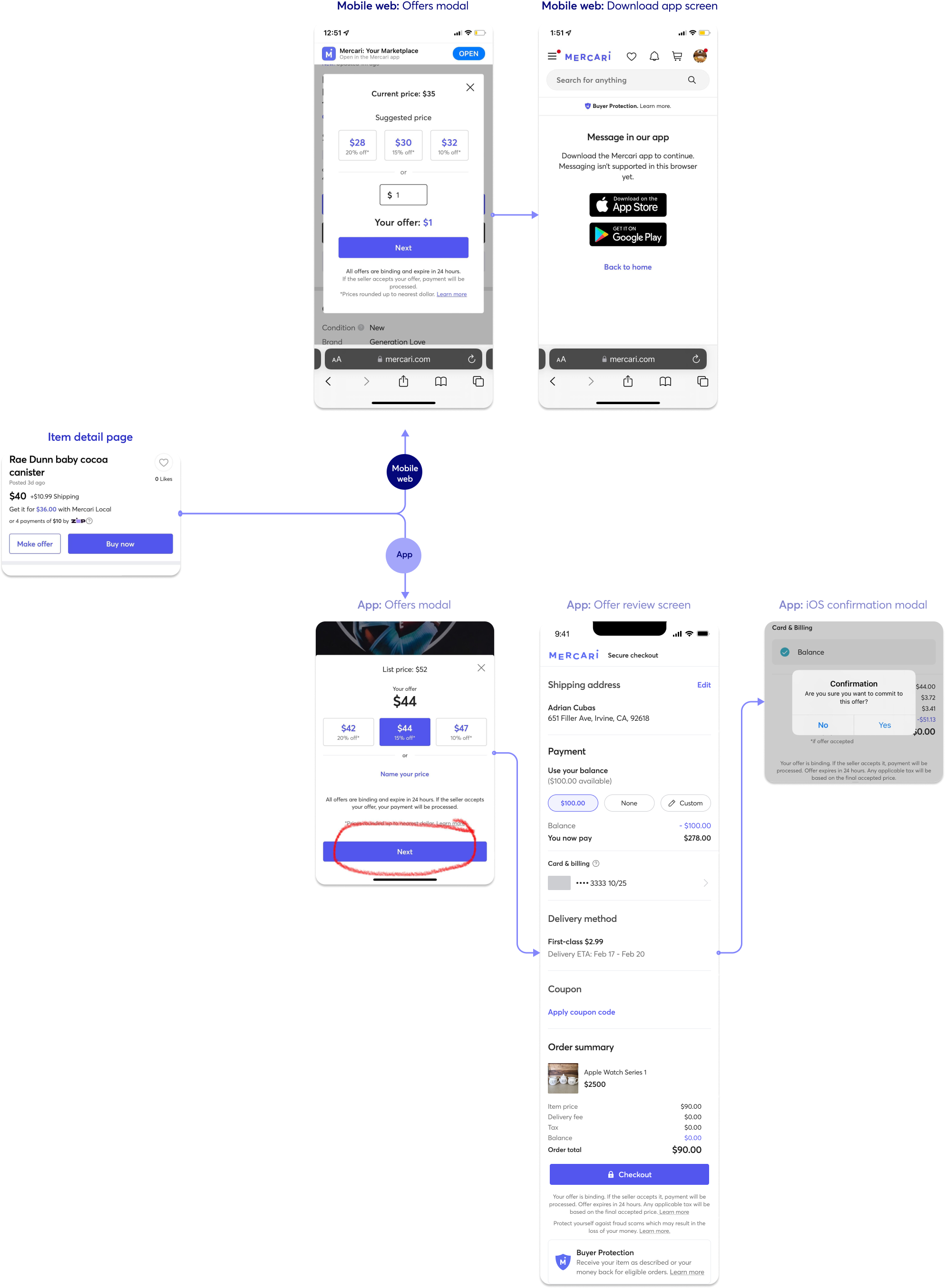
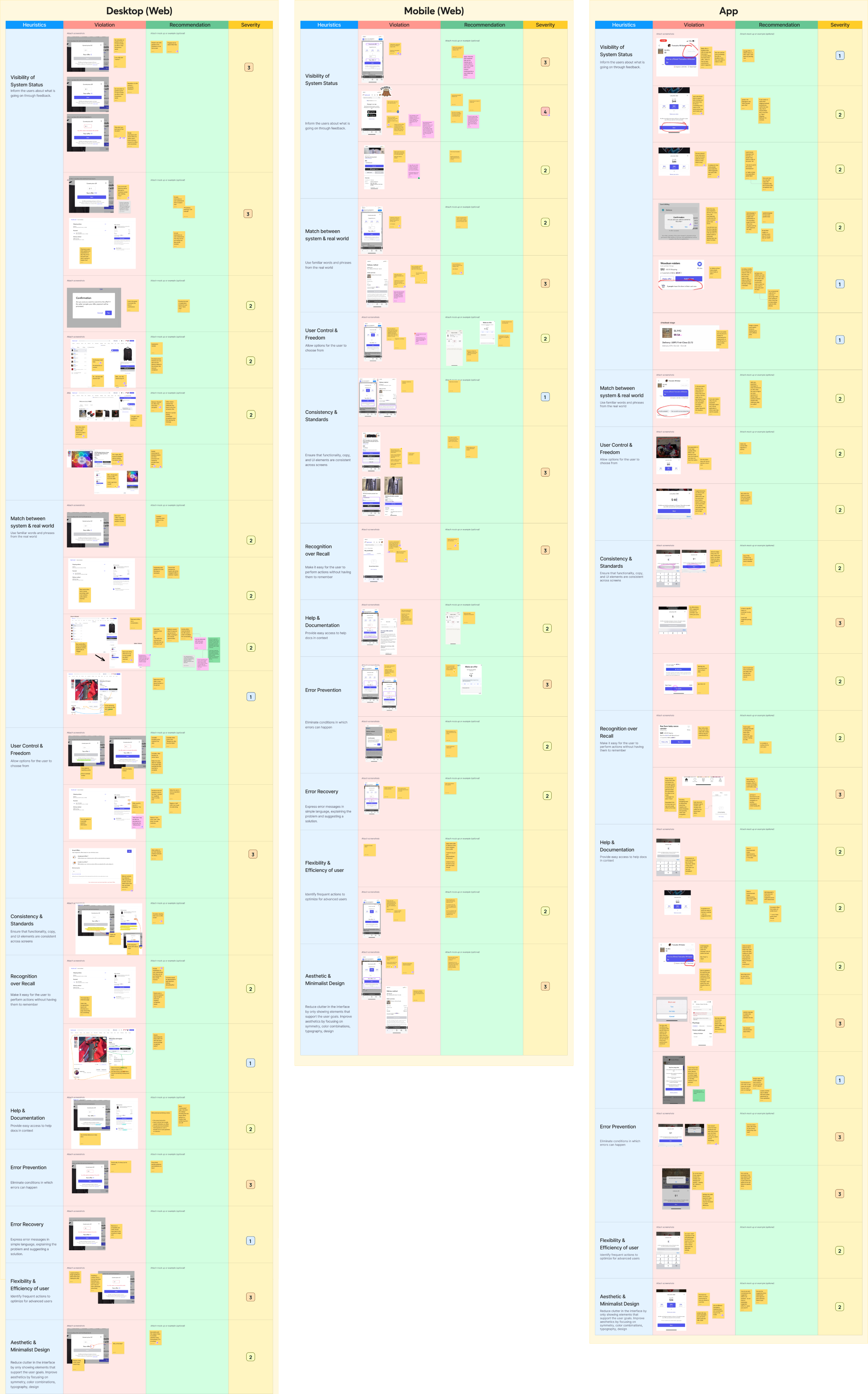
I collaborated with the designer to conduct a thorough walkthrough of the current offers experience, identifying usability issues along the way. Each device had unique designs and flows due to their previous development, presenting a distinct challenge. We used Nielsen Norman Group's principles to guide our evaluation and documented the severity of issues within the experience.
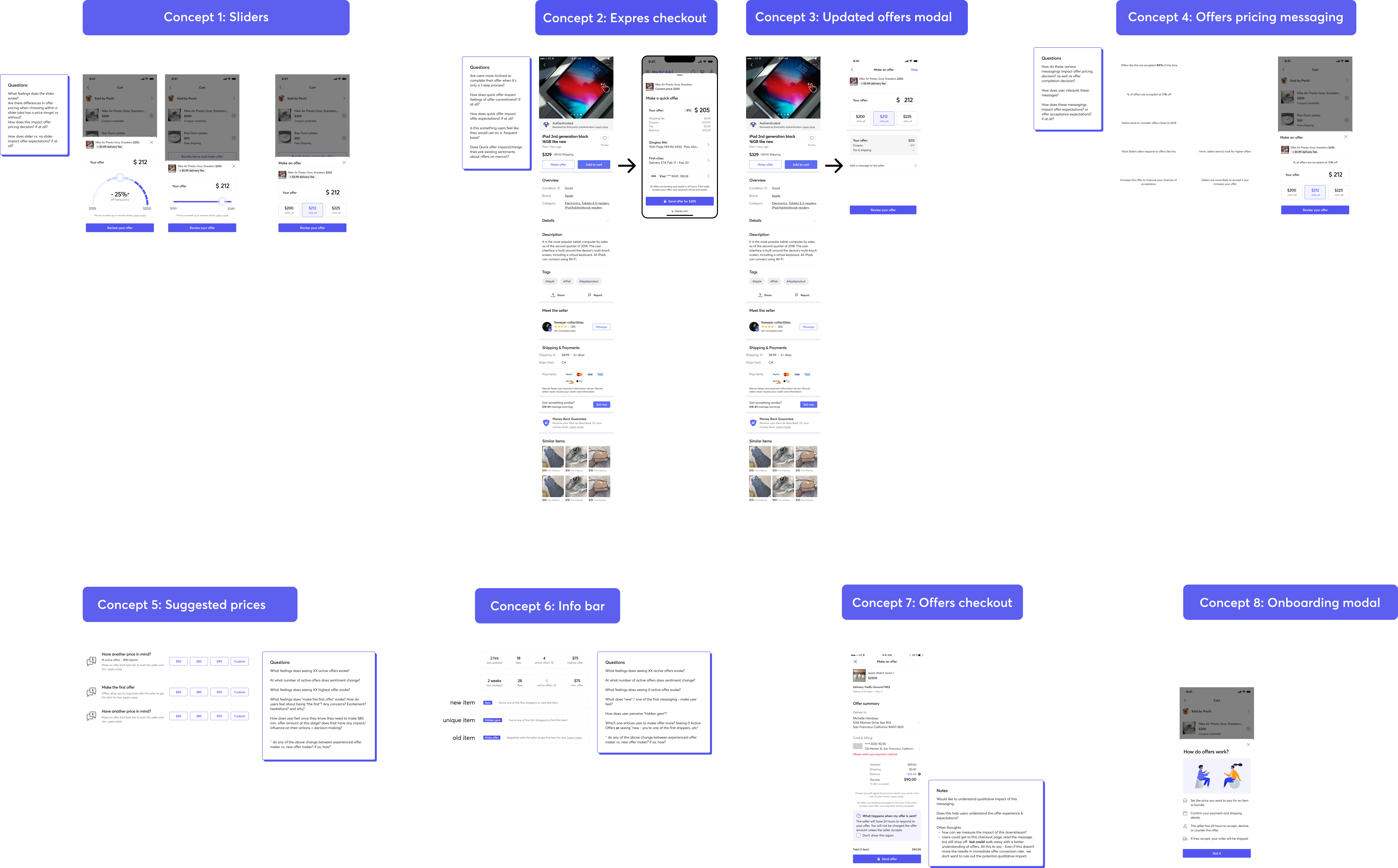
In response to the heuristic evaluation findings, the team explored various design solutions, including different visual styles, new messaging, and significant changes to the existing flow. To refine these concepts, we presented early designs to Mercari users for feedback. We also asked users to rank each idea based on its usefulness.
This user feedback provided the justification to move forward with several ideas, including the updated offers model, suggested prices on the item detail page, an info bar, and new onboarding.
From direct conversations with shoppers, I learned that they often looked for offers to get a deal for themselves. This led to a gamification element where "low" offers became common, which frustrated sellers. I aimed to make the offers experience more thoughtful and equitable for both shoppers and sellers. Additionally, there was little context on the offers feature across the platform. To address this, I crafted different versions of branding to be applied to surfaces such as the item detail page.
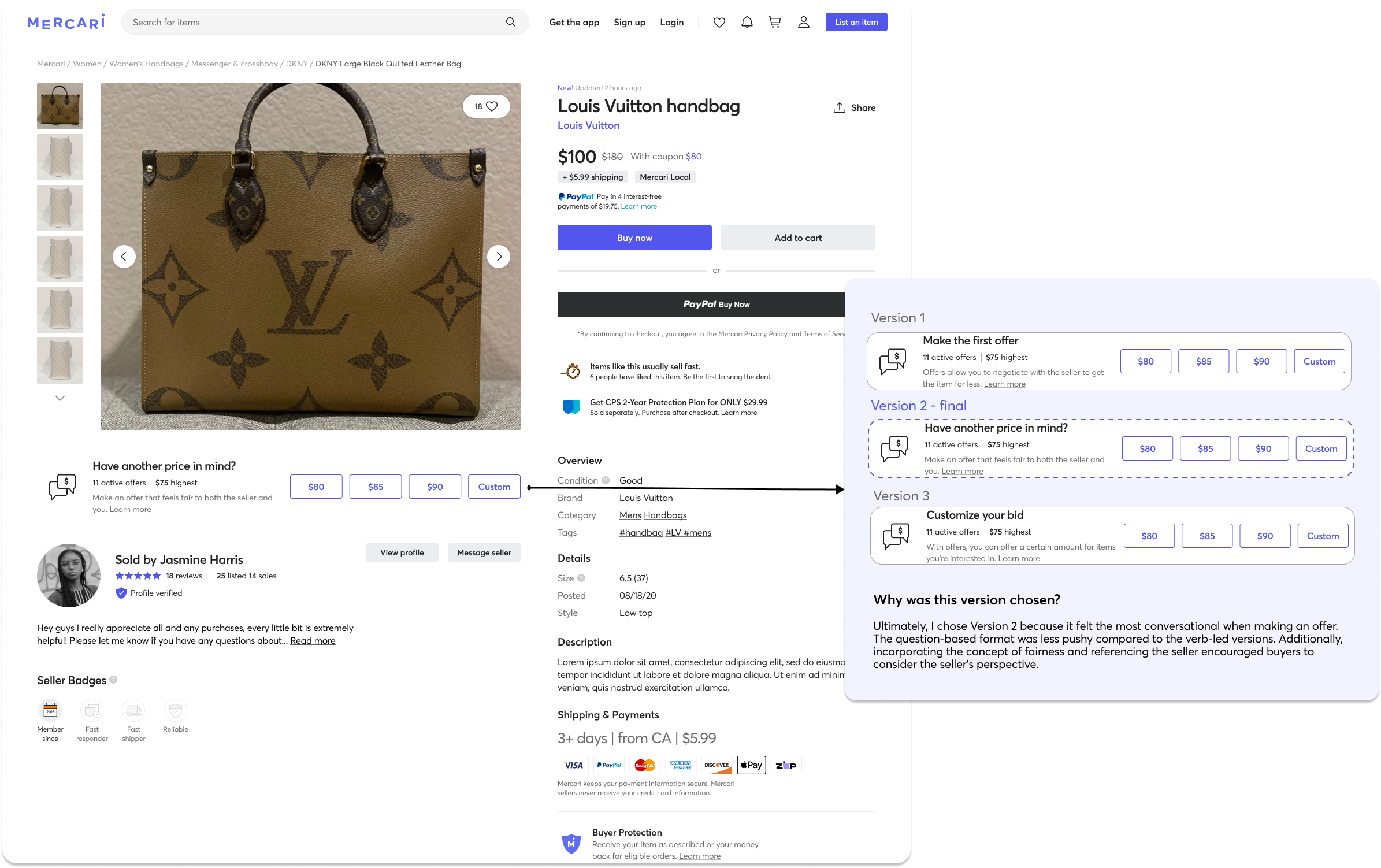
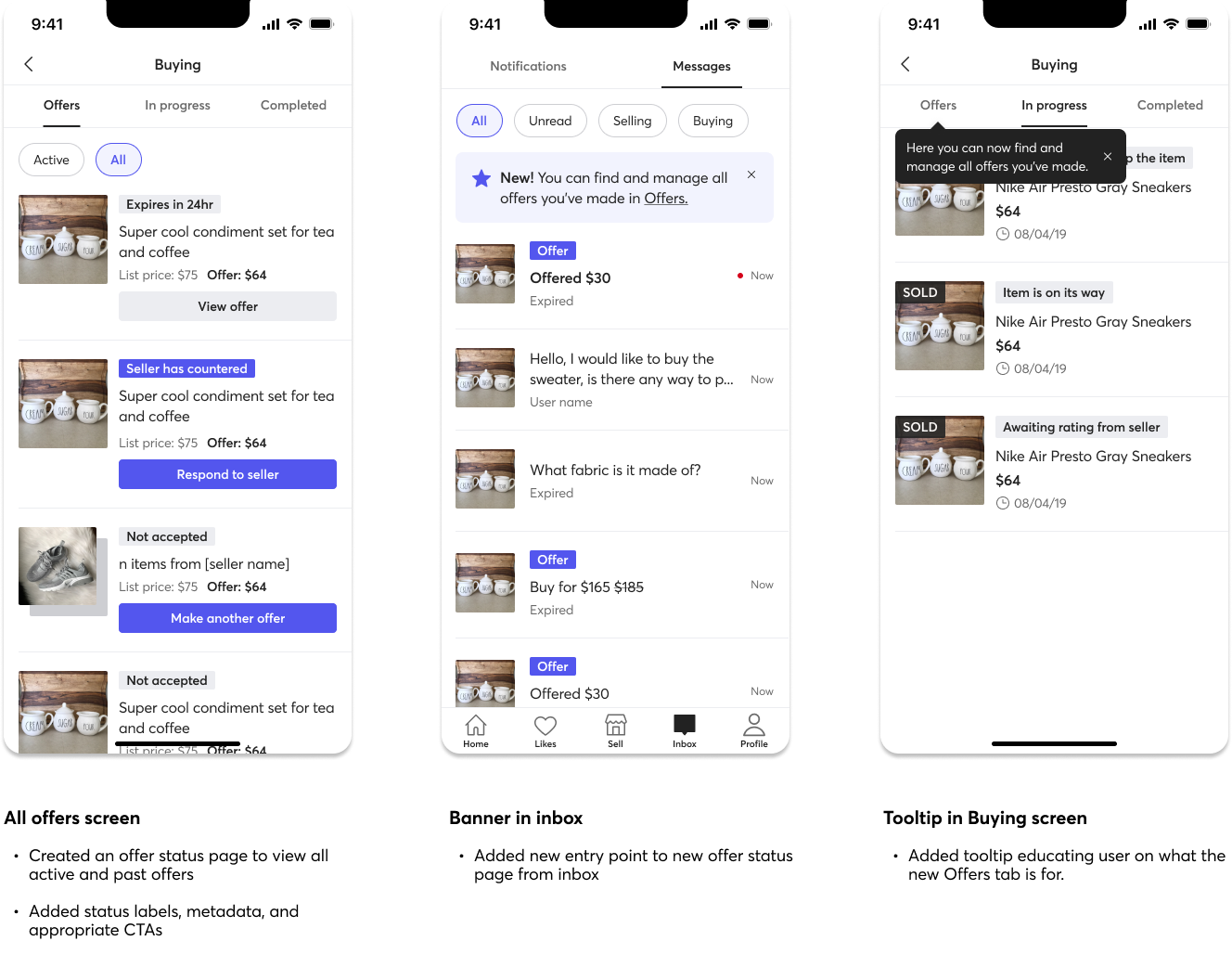
Previously, users could only find past offers through the inbox. However, after speaking directly with users, I learned that they expected to find their offers within the Buying tab. To increase the visibility of offers and align with users' mental models, I explored how adding offers might affect navigation and various core experiences.
One of the biggest challenges was accommodating the differences between device types, which affected entry points and limited app real estate. Additionally, there were historical inconsistencies in how we labeled pages and entry points.
To address these issues, I examined different menus related to Buying. I then laid out various ways to place offers. Ultimately, I decided to create a separate tab within the Buying/My Purchases pages, as users associate offers with a step before an order is confirmed.
.png)
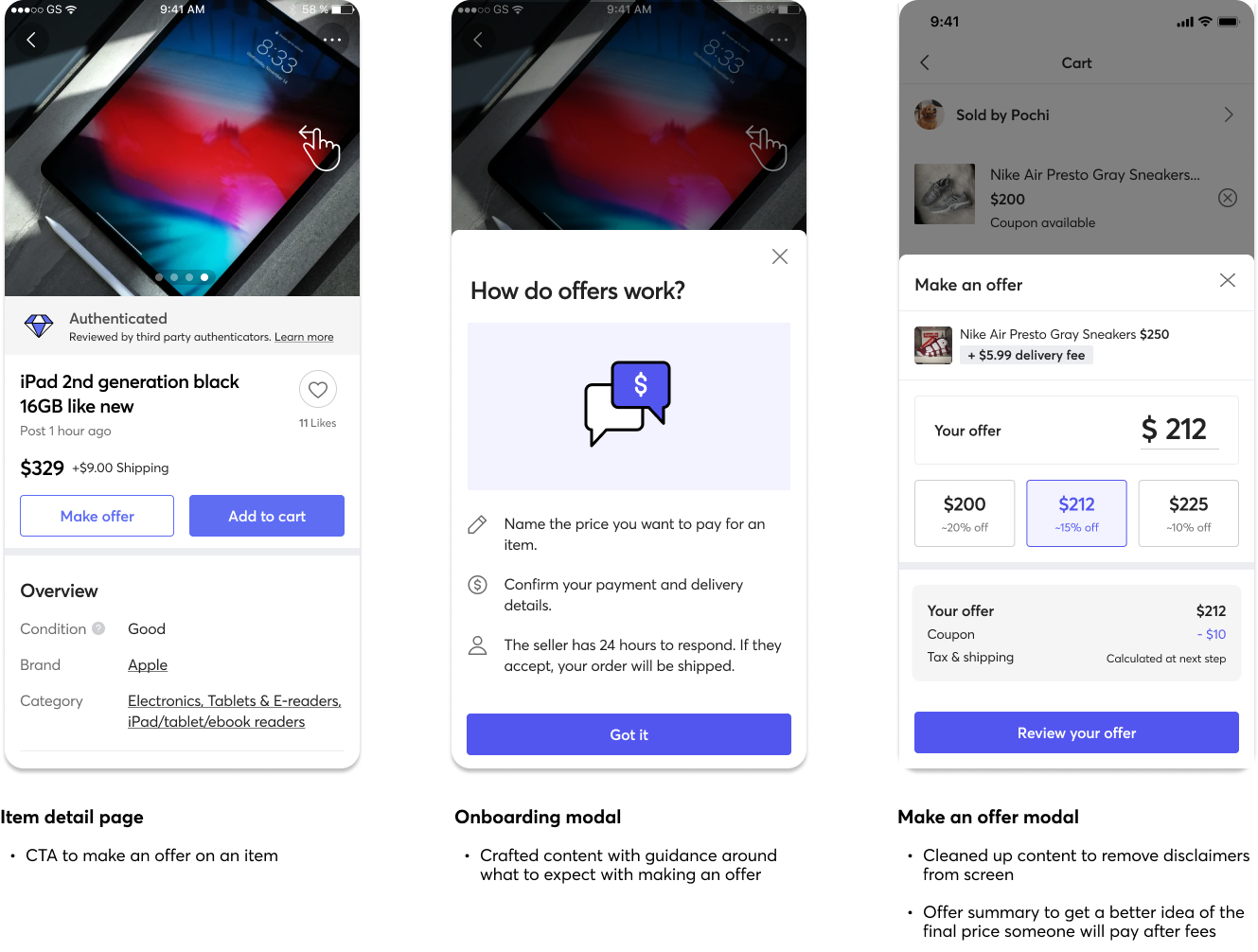
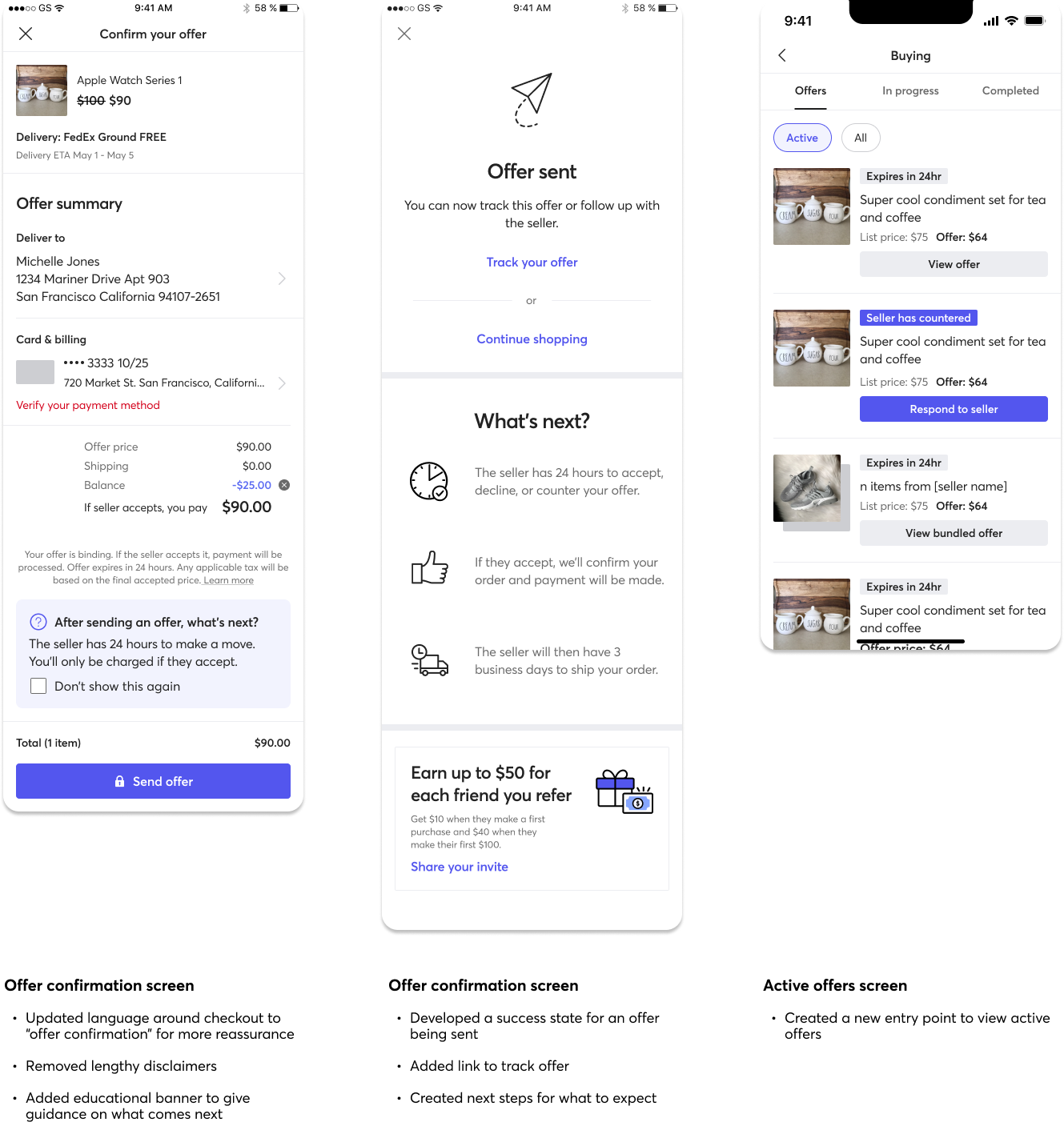
One of the biggest challenges was deciding which ideas to move forward with, as there were many different concepts but limited development resources. Once we achieved alignment with the developers and the rest of the product team, I finalized the content.
.png)
.png)
.png)
Several features and new surfaces were fully designed but couldn't be implemented in the first project phase due to development constraints. We have set these aside for future testing in the next phase.
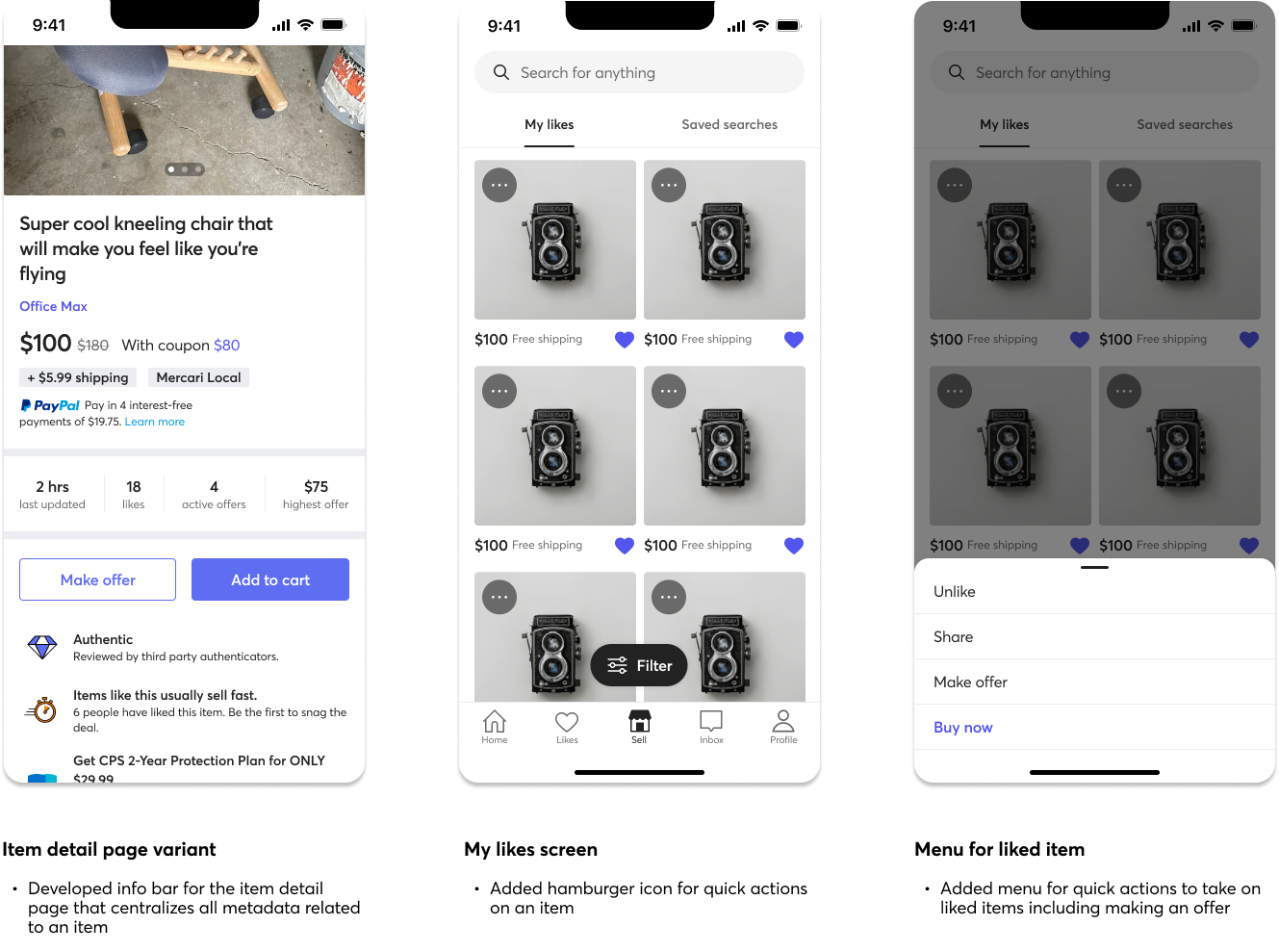
Here is the updated offers experience based on the features that were prioritized and developed.

There was a positive impact on all metrics related to offers adoption and completion once the new features as well as updates were released. We were able to increase the offer start-to-completion rate for all platforms and number of offers overall.
Through updates and additions to the offers experience, I found new ways for users to better understand offers and have clear visibility into the status of their offers. I also established new UX processes to work with different disciplines, including ownership of concept testing, which enabled us to gather live user feedback and validate our design approach. This initiative demonstrated my ability to help define product strategy and scope out design solutions for an ambiguous project.
As mentioned, there are still some future offers improvements and features that have yet to be developed. Beyond that, we plan to address offers from sellers which exists as a separate experience.